The Belgian design scene is vast and diverse. Belgian institutions are always at the forefront of supporting the people, new projects and products that make our country dynamic and unique.

Milan Design Week 2026 - 20 Belgian must-sees
Sometimes work is still underway on the prototype, or new releases cannot be shown before the start of the fair, such as a collection by Baptiste Vandaele for Emu. We’re looking forward to Any, a new concept in two-wheelers, designed by Lowie Vermeersch, with plenty of luggage space. And there are anniversaries to celebrate: Muller Van Severen is marking 15 years with an exhibition, Ethnicraft is turning 30,… We’re already looking ahead with 20 new products from Belgian designers and companies. On the Belgian Design Map, you’ll find an overview of the presentations by Belgian designers and companies.
The most significant new Belgian event in the city is Fedustria’s ‘Best of Belgium’, now taking place not only at the trade fair but also in a palazzo in Brera. Brussels House is once again opening its doors to showcase Brussels design. There are also plenty of new, up-and-coming names at Isola.

Jan Pauwels studied product design in Antwerp. Following a career as a product designer and marketer, he set up his own lighting design studio, Random.be, in Antwerp in 1993. In 1998, he designed his first collection for the Dutch company Quasar, marking the start of a fruitful and ongoing collaboration. As a lighting artist, Jan creates lighting objects designed to enhance the architectural needs and functional requirements of a space. The transparent aluminium structures place the light at the centre. Small light bubbles lend the space a magical atmosphere. Quasar is now honouring him on Masterly.

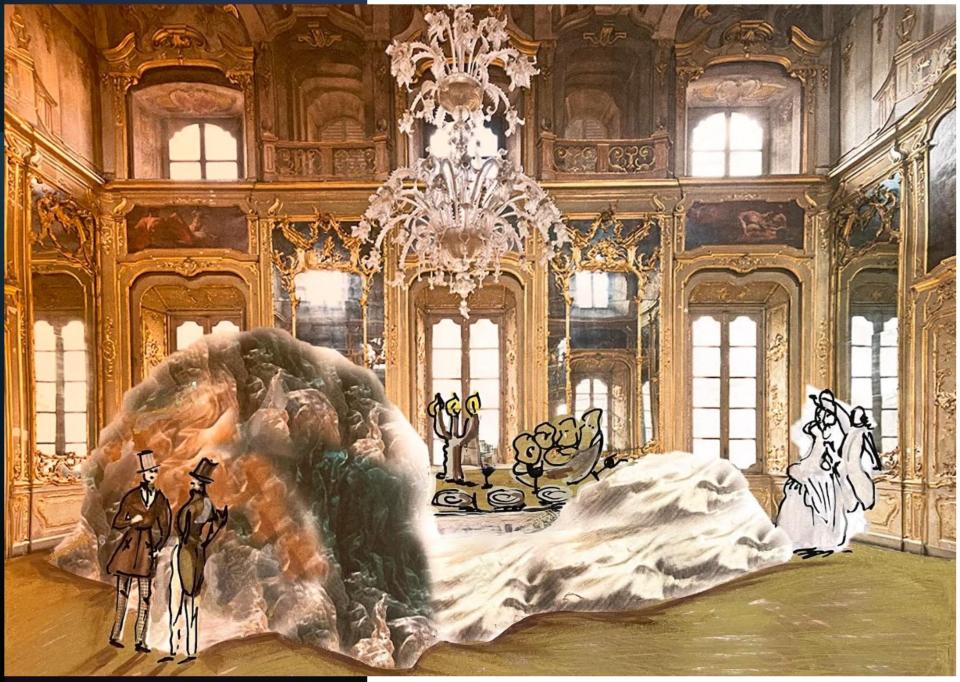
At Alcova, Studio DO presents ‘Within the Ruins of Aesthetics & Function’. The installation explores how heritage, geology and contemporary creative processes intersect. They showcase an encounter between lesser-known yet richly layered Belgian heritage stones — red marble, black marble, blue stone and flint — and Italy’s globally iconic marble tradition. Not as a contrast, but as a resonance between two landscapes, two stories and two ways of working with stone. In a quiet space, stone is not merely an architectural mass, but a vessel for stories. Be sure to visit Marijke De Cock and Manon Viratelle during your visit to Alcova.

Once again, there are plenty of Belgians in the Isola district. Brussels House serves as a true Belgian hub. The exhibition “From Matter to Meaning” references the official theme of the Salone del Mobile, “A Matter of Salone”. It explores matter as a raw material and as a vehicle for meaning. Through a narrative in three parts – from the original material to its human transformation, to a fulfilled and sustainable meaning – a dozen selected pieces highlight innovative Brussels design: Alter, Aria Ann Design, Emaillerie Belge, GDO Project, Grammar, Manon Viratelle, Margaux Baert (Paper Art| & Craft Design), Mavito, Studio Lisa Smith.

Grammar
‘The Shape of Belonging’, a collaboration between Isola Design and the Polish Oliwia Maria Studio, explores the invisible links between identity and heritage through craftsmanship and memory. Among the participants are three Belgians: Camille Tan, Frederik Van Humbeeck and Cedric Ceulemans, who lives in the Netherlands. Camille Tan has been working in sculpture, design and craftsmanship for over fifteen years. Inspired by nature and rock climbing, he has developed a profound physical relationship with his materials. The climber’s body learns to read gravity, to feel tension, weight and resistance, and to find lightness within constraints. Making a stone float, adjusting an axis, balancing a fragment, means reshaping the relationship between weight and lightness, strength and fragility. The mobiles evoke breath, light and elemental movement.

Solidified is organised by Sanne Kaam and David Heldt. PR is handled by Maarten Statius Muller, so there are also quite a few Belgian contributors: Monad Origin, Studio Bas Pattyn and Objects by Marie. Monad Origin is a Belgium-based, interdisciplinary lab/studio that redefines the creative process through energy, frequency and vibration. It was founded by Nick Peeters and Anujin Byambaa, who began collaborating in 2023 and officially established their studio in early 2025 at the intersection of sculpture and functional objects. The practice translates measured sound and light inputs into physical form. Each object is produced in a limited edition and exists without an imposed narrative. Although the process remains consistent, the results vary – allowing the form to emerge directly from the frequency.

To mark its fifteenth anniversary, Muller Van Severen presents the exhibition ‘Silhouettes: Celebrating 15 Years’, in collaboration with Tim Van Laere Gallery. The exhibition features 15 unique, life-size aluminium candlesticks. Each form is an abstract reinterpretation of recurring motifs from the studio’s body of work: chairs, cabinets, lamps, vases and sculptural structures. The use of a single uniform colour and material — aluminium — for each object enhances their formal clarity and emphasises rhythm, proportion and composition, whilst the large coloured candle introduces a temporal dimension. As the candle burns, the object undergoes a slow and irreversible transformation.

Luc Druez’s (LcD Textiles) installation at the Palazzo Litta explores the transformation of materials and the way we perceive them, in line with the Design Variation theme ‘Metamorphosis’. A metallic-looking bench is made entirely from fragments and materials sourced from the studio’s own production process. Workshop scraps, textile trimmings, failed prototypes and second-grade fabrics are transformed into the elements of a striking composition in which materials evolve and take on new meaning. In this universe, discarded materials capture and reflect light, thereby becoming precious works of art. For this installation, LcD invited feather artist Eric Charles Donatien, who adds an organic and theatrical dimension.
The Belgian fabric designer Designs of the Time has had a presence in Milan for several years. Azimuth is their latest collection of interior fabrics, inspired by the raw beauty, earthy colours and rugged textures of desert landscapes.
For this occasion, Designs of the Time has invited Nathalie Van der Massen. Drawing on her keen sense of space and materials, she was guided by the tactility of the collection and the layered structure of traditional desert architecture. Using the fabrics, she created a series of unique room screens — the Azimuth Screens — in which protection and intimacy interplay.

Vincent Van Duysen has been Molteni’s creative director for 10 years. This is being celebrated with a number of new launches. Julian, a fully modular seating system, opens up endless configuration possibilities, from end and centre units to islands and newly designed armrest coffee tables. The Eter coffee table completes the modular system and adds a sculptural element.
The Physis kitchen brings Vincent Van Duysen’s organic vision to the very heart of the home. The formal harmony of the Physis kitchen is reflected in its rounded corners and sides, which are further emphasised by a half-bullnose finish. Transparent glass doors and open compartments enhance the sense of openness and spatial fluidity.

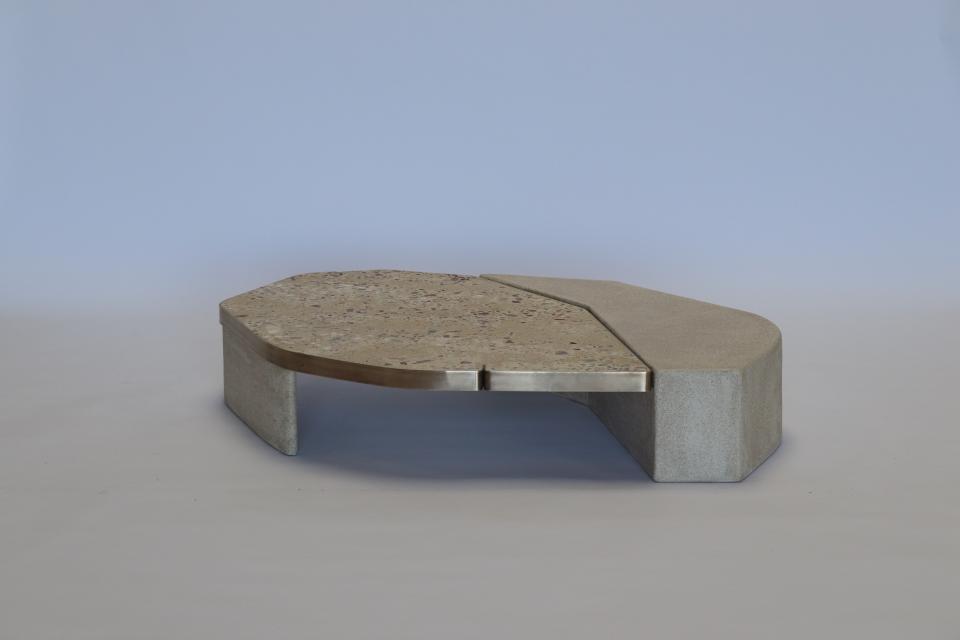
Alinea has had a permanent home on Via Brera for several years now. This year, Leo Aerts surprises us with the Via Via coffee table, designed as a study in movement and balance. Ceppo di Sicilia is a distinctive marble that stands out for its rich composition of fragments, textures and depth of colour. Via Via is characterised by a subtle tension in its form. The upper and lower curves twist in opposite directions, creating a gentle yet continuous sense of movement — as if the stone itself were shifting. Rounded transitions guide the eye towards unexpected angular curves. Each table features a subtle mark on the base, a discreet sign that references its origin and craftsmanship. Via Via is available in both square and rectangular versions.

At Maison & Objet, Belgofurn presented its ‘Best of Belgium’ concept, a collective showcase of all its members present in Paris. Now they are staging a Milanese version in a palazzo in Brera, also featuring the companies exhibiting at the Salone. It is a survey of Belgian design presented in a refined, gallery-like setting.
In addition to the group presentation, there are a few individual stands. Liz Tables made its international debut at Maison & Objet last year. The collection consists mainly of three material groups: terrazzo stones (a combination of recycled products and exclusive offcuts of semi-precious stones and marble), metals (mainly brass and copper) and exclusive wood veneers. The tables stand out thanks to their brass ring, a distinctive detail. In Milan, they are launching Bypass, a coffee table.
Prado, winner of the Henry van de Velde Company Award 2026, received this prize for its unique combination of lighting and ventilation. Prado transforms the Galleria Bottagantica into a stainless steel laboratory. A serene, white space built around Prado’s latest innovation in the field of invisible home technology. Together with Vervloet and Atelier Luxus, companies acquired by Prado in 2025. Three houses, one address.

There is probably no other design studio that has launched more designs than Studio Segers: 28 products, 11 of which are new, across 6 different companies. In addition to the Milo side table for Tribu in the city, they designed the Hush sofa and Float armchair for Indera, the Sweep and Ribbon collections and the Tomus armchair for Vincent Sheppard, the stand, Pagus and Morphosis for Gardeco, the Flok coffee table for Paul Rogers, and the stand, the Kori sofa and Sova table for Todus. One of the key features of Kori is the option for a two-tone design. The backrests and armrests can be finished in a different fabric colour to the seat and comfort cushions, creating elegant contrasting compositions.

Cas Moor is the in-house designer for the PR Living group. For Paul Rogers, he designed the Cover Wood: a chair concept featuring tapered wooden legs combined with soft, rounded lines that feel both timeless and refined. An upholstered seat and backrest provide extra comfort without detracting from the chair’s sleek silhouette. The Tone for Muundo draws its inspiration from the gentle interplay of light and shadow. The sculpted Mortex surface, handmade and unique to each piece, captures the light in different ways as the day progresses. The Tone is suitable for both indoor and outdoor use.

Atelier Vierkant presents Archae & Petrae, a diptych in which ceramic forms and nature-inspired objects come together. The presentation brings two approaches together: whilst Archae returns to the essence of the studio, Petrae explores a more landscape-oriented perspective. Petrae was developed in collaboration with Gerhard Zemp and is based on the idea that nature can reclaim its place within architecture. The new Janus model connects both worlds. Archae can be found at the Salone del Mobile stand, whilst Petrae is presented in an installation at Paola Lenti in the city.

Vito Boox is a young visual artist and designer who works at the intersection of digital production and traditional craftsmanship. His work draws on natural processes such as growth, erosion and decay to create a contemporary language of neo-ornamentalism, in which form conveys a narrative and nature imparts meaning. His first international presentation, in collaboration with the Dutch gallery Van Rossum. The works on display at their stand are the result of a lively dialogue: the artist acts not as a master, but as a participant. From the slow process of fermentation to the tangible layering: here, the material itself helps to determine the form. From Vito, we see the Ischi lamp and the Tamarin table object. Also on display here is work by Pieter Maes, who has his studio in Paris but hails from Antwerp.

Belgian Furniture is growing every year at the trade fair: 18 companies spread across 4 stands in 3 halls. Alongside a few regulars, we see companies such as Betaco, Mazu, Coozus, Kana Objects, and more. The Mazu Luminor Ring can be placed around trees and slabs. Made from high-quality aluminium and finished with the same attention to detail as the ambient planters, the Luminor Ring is built to last in outdoor environments.

Betaco’s Camogli collection is also designed to last, offering sturdy teak lounge sofas and tables. These pieces are renowned for their robust and substantial construction and are ideal for creating minimalist yet durable outdoor spaces. The design by Michel Van Weehaeghe, co-founder of Betaco, focuses on clean lines and durable materials, enabling the collection to withstand both the test of time and the elements whilst offering a timeless aesthetic.

Ethnicraft is celebrating its 30th anniversary. The 2026 outdoor collection is tailored to our changeable climate. Furniture that can withstand all seasons, not just the sunny ones. All this under the motto ‘Under Belgian Skies’. Monocle, Ethnicraft’s first modular outdoor bench, offers sculptural flexibility and the same comfort as indoors, specially designed for outdoor living. The Zahara Stripes outdoor cushions, with their striped pattern, add a touch of refined, graphic detail to a terrace. Subtle accents that enhance the whole without overpowering it.


