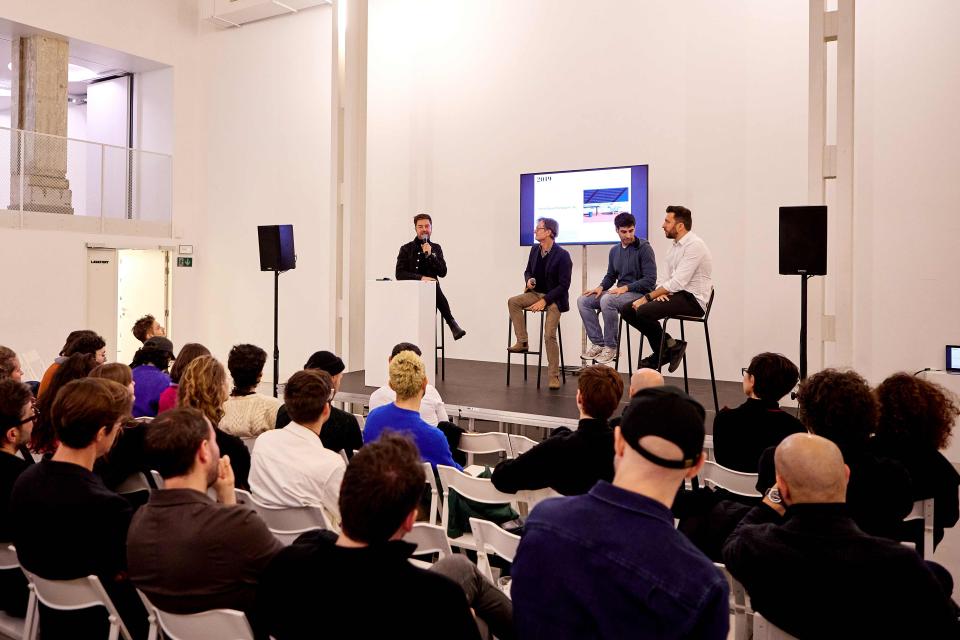
The Belgian design scene is vast and diverse. Belgian institutions are always at the forefront of supporting the people, new projects and products that make our country dynamic and unique.

The Milan Design Week 2026 in 20 highlights
Was 2026 a special edition? Not really. The Salone del Mobile announced the good news this year that it had attracted 5% more visitors than in 2025, but failed to mention that it had lost nearly 20% of its visitors the previous year. The city was as busy as usual. The most interesting venue remains Alcova; what was new was that an entry fee was now required at both venues.
What made us personally very happy were the two wonderful Belgian exhibitions: Fluid Re-Collection by Linde Freya Tangelder, in collaboration with Cassina, and Silhouettes: Celebrating 15 Years by Muller Van Severen. But there were even more beautiful things to discover. Our twenty Belgian highlights:
No permanent spot in Milan, but on display at all sorts of events during Design Week: the Any, from an Antwerp-based start-up and designed by Lowie Vermeersch. Any is a Light Utility Vehicle (LUV): simple, practical, built for everyday use, offering all the functionality of a compact car without the extra weight. Essentially, it’s an electric motorbike, manoeuvrable in traffic, small enough to park outside your front door, but with a flexible 120-litre storage space – meaning a carry-on suitcase fits perfectly. Less noise, fewer emissions, better streets.

Main Stage is a meeting of contrasts where lines intersect and materials reveal their essence. Manon Viratelle, who also took part in the Brussels House, incorporates ceramic fragments by Cristina Gusano, whose work explores geometric shapes, lines and light in unique pieces. This creates a dialogue between materials. Textiles flutter gently in the breeze, whilst ceramics command an impressive presence. Their worlds merge in their Extended Play project. On display at Villa Pestarini near Alcova.

The Pappardelle lamp is a sculptural collector’s item by Jeroen De Ruddere, which has been exhibiting in Brera for several years. The base of the lamp is made from fresh pasta, specifically pappardelle, and cast in bronze, thereby preserving the texture and irregularities of the original material. The fine grain of the flour, which used to keep the strands apart, is visible on the surface, giving the object a distinctly tactile quality.

Linde Freya Tangelder organised Fluid Re-Collection in collaboration with Cassina at 10 Corso Como. It offered a multifaceted insight into the designer’s world, combining craftsmanship and industry with a contemporary vision. The collaboration between Cassina and Linde Freya Tangelder began in 2022 and is based on a shared ambition to create culturally relevant designs that embrace an innovative and industrial approach to traditional craft techniques.

Lars Dittrich studied Material Futures at Central Saint Martins and is currently based at the Microbiology Research Group at the VUB. For this project, exhibited at Dropcity, he is collaborating with Marie De Ryck, head shoemaker at La Monnaie/De Munt. By integrating La Monnaie/De Munt’s heritage of craftsmanship with advanced biotechnology and feeding practical experience back into the lab, they aim to take a major step towards making bio-manufactured footwear a functional reality.

Floriane Bande is a Belgian interior architect and designer whose work bridges the gap between space and object. Her Belgian sense of proportion and architectural insight go hand in hand with the refined attention to detail and elegance she has developed in Paris. Floriane Bande currently works in France, Belgium and the Netherlands. Alongside her practice as an interior architect, she is developing a growing collection of furniture and objects. The LOUVRE pouffe was shown in ‘Loulou’ fabric by Maison Perrine – made from leather, linen and cotton – or can be fully customised with other hand-woven fabrics. Designed as a sculptural object, inspired by the stone plinths surrounding the Place du Louvre in Paris, where tourists instinctively pause, sit down, wait and observe.

Deoron is an online design platform. They invited Studio Moto to design the bar for their presentation. Belgium has already showcased Design Stack several times in Paris and Milan. Nothing new under the sun, were it not for the fact that this was the first time Stack was showcased and used here with an integrated sound system and doors.

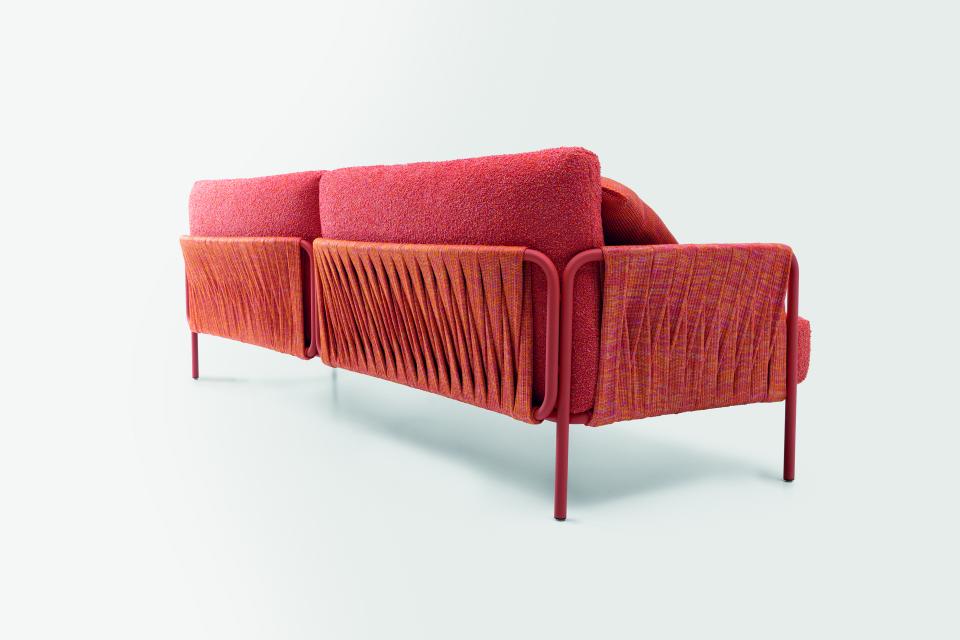
Bertrand Lejoly designed Plissé for Paola Lenti, a range of outdoor furniture comprising a chair, an armchair, and two- and three-seater sofas. Plissé is characterised by a striking shell of hand-woven straps on a metal frame, which supports soft cushions. The name Plissé refers to a textile pleating technique that creates a series of folds, combining structure and fluidity. This duality is reflected in the contrast between the softness of the seat and the more graphic quality of the weave.
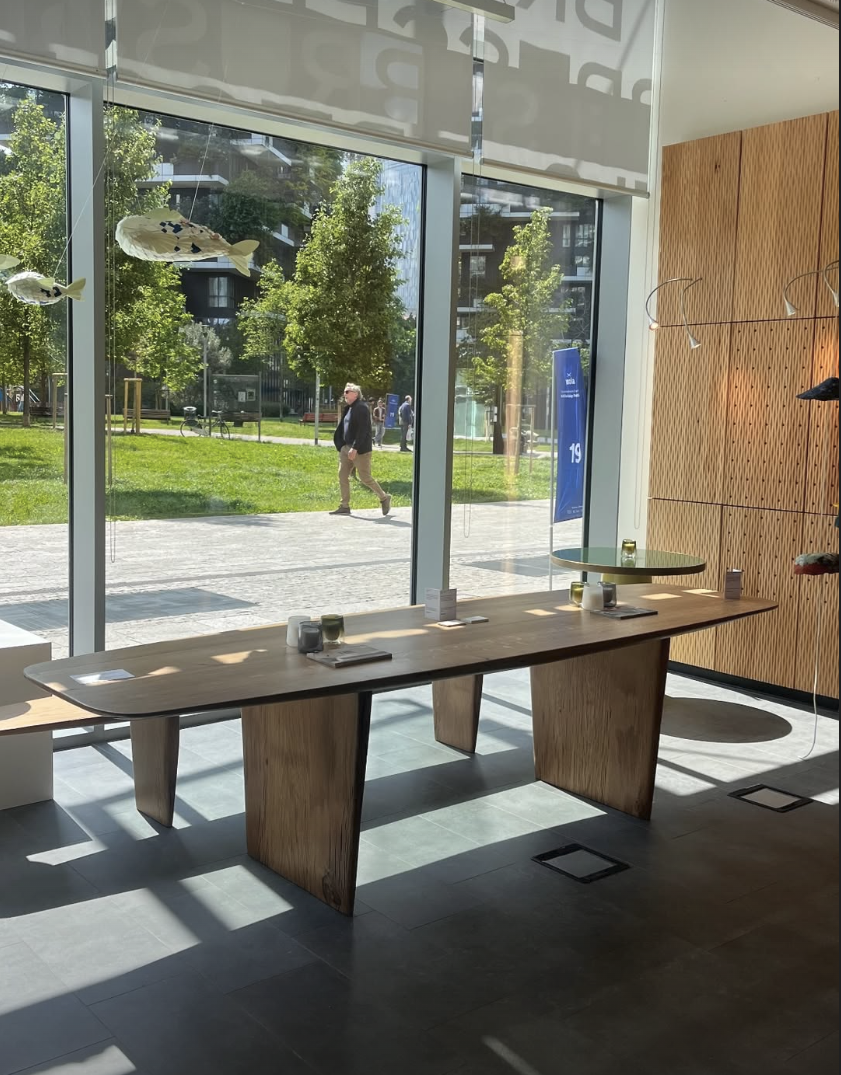
For every project, GDO Project takes its starting point from the story of the material, which is transformed into a functional art object. At Brussels House Milan, the studio is presenting a collection of oak furniture in collaboration with Studio Max Reul. Each piece is handmade, unique, numbered and signed. The project highlights local raw materials, short supply chains and the artists and craftspeople involved. It offers a vision of furniture as a sustainable work, rooted in its surroundings.
For over 40 years, Arte has been designing and manufacturing sophisticated wall coverings that blend aesthetics and innovation. During Milan Design Week, the company takes walls to a new dimension: not as a backdrop, but as a statement. Echoes of Memphis revolves around pure materiality. Raffia, cork, woven grasses and shells are used in unexpected ways, demonstrating the versatility of wall coverings.
Inspiration from Memphis, the ancient Egyptian capital, is translated into a contemporary and refined spatial composition in which texture and craftsmanship set the tone. For this unique installation, Arte has collaborated with Sagarminaga Atelier, an artist renowned for her work with natural fibres.

The Dora collection puts a contemporary spin on the archetypal Scandinavian bistro chair. The graphic design and attention to detail celebrate the intersection between nostalgia and modernity, where design becomes both essential and highly relevant. The lines flow naturally into one another, creating a cohesive design language in which nothing seems left to chance. The collection, which is made entirely of aluminium and comprises a chair, armchair, bar stool and lounge chair, stands out for its slender, dynamic silhouette and the perforated pattern that runs across the seat and backrest, creating a refined interplay of light and movement. A design by Baptiste Vandaele for Emu.

Two designs by Alain Gilles made their debut at Mogg. Inspired by the rocking chair, the Jumbo chair reinterprets its architecture and structural logic, building on the work of Mart Stam, Ludwig Mies van der Rohe and Marcel Breuer. The metal tube that defines the chair’s structure is no longer the thin, curved tube; it is now a large, bold tube consisting of four carefully welded sections. The base and armrests are two identical, graphic and geometric components that give the impression that the piece is depicted in mirror image. The seat appears to float within the structure. The Hero table embodies a struggle between softness and boldness, captured in a single piece of furniture. It is as if the table is torn between its softer and harder sides. At the same time, however, it exudes a sense of balance and materiality, with its four legs supporting the tabletop at their ends.

KĀNA objects, Inge Lagae’s collection, embodies natural, organic beauty. Through brushing and sandblasting, they bring out the wood’s grain, depth, texture and understated appearance, gently highlighting it in the light. Among the pieces presented at the Salone was the Hiku tea sculpture. Hiku draws its inspiration from the Japanese tea ceremony. The low, round table invites interaction and conviviality. It exudes simplicity and strength. Tables of different heights and materials can be combined to form a harmonious whole. Also available with a stone tabletop.

Loïc Corthals studied Industrial Product Design at Howest, followed by a Master’s degree in Furniture Design at the Politecnico di Milano. He works on projects that bring clarity, character and lasting value to everyday objects. Duocurve is a lamp designed around the idea of layers, softness and visual balance. By reimagining the classic lampshade, Duocurve achieves a warm and tranquil aesthetic that feels both architectural and inviting. Otti Mini Office is a compact workspace solution, designed for the changing way we live and work. It offers a small yet focused environment that supports productivity without requiring a separate room or large setup. Our Belgian designer at the Salone Satellite.

For Xavier Lust, it all began long ago at the Salone Satellite. After years of designing for major Italian brands, Xavier has in recent years focused primarily on collectible design. This makes him the ideal fit for the new section: Salone Raritas. Xavier presented a selection of recent and previously unseen works, exploring the relationship between form, material and balance. From the sculptural ambiguity of Pi to the suspended tension of Smoke Table and the narrative structure of The Alchemist: each piece is the result of an in-depth dialogue with the material.

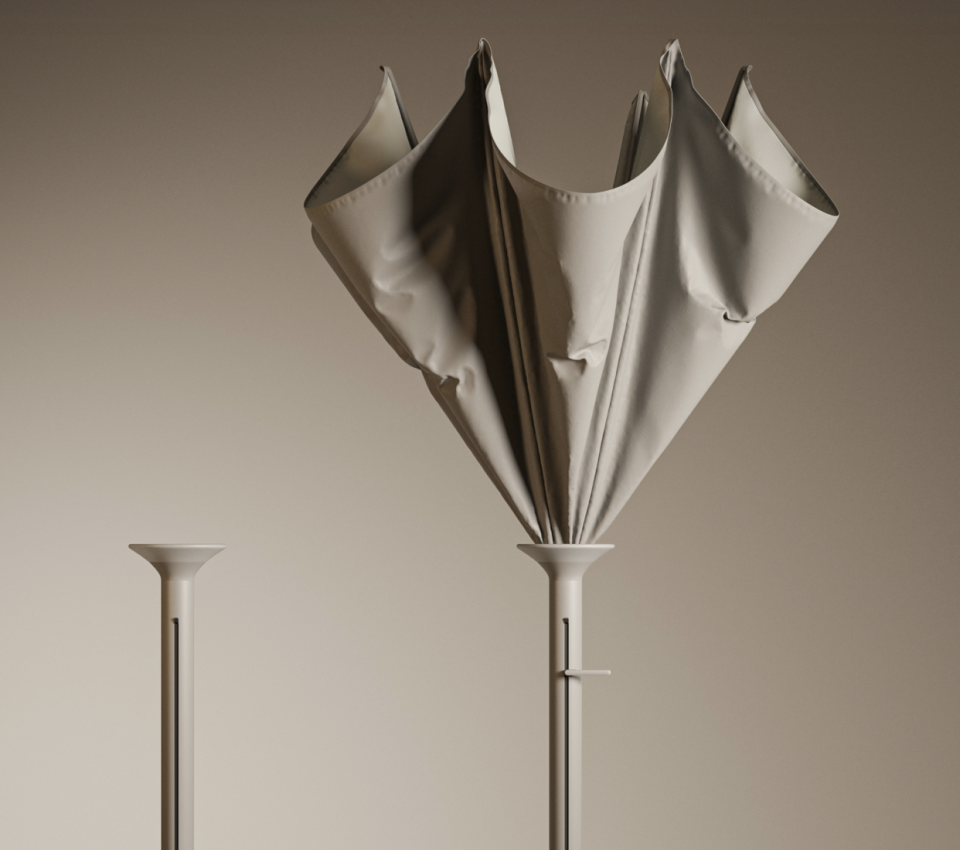
Anamon by Royal Botania unfolds like a blooming anemone. Its defining feature is its movement. Instead of the usual outward fanning motion, the lamp opens upwards from the stem itself. With a single upward movement of the lever, the shade emerges from the stem. Anamon is designed as an object with a dual function. During the day, it provides shade with the tranquil appearance of its fully opened canopy. When daylight fades, a built-in lighting system transforms it into a source of soft ambient lighting – without the need for additional equipment, cabling or compromising its silhouette.
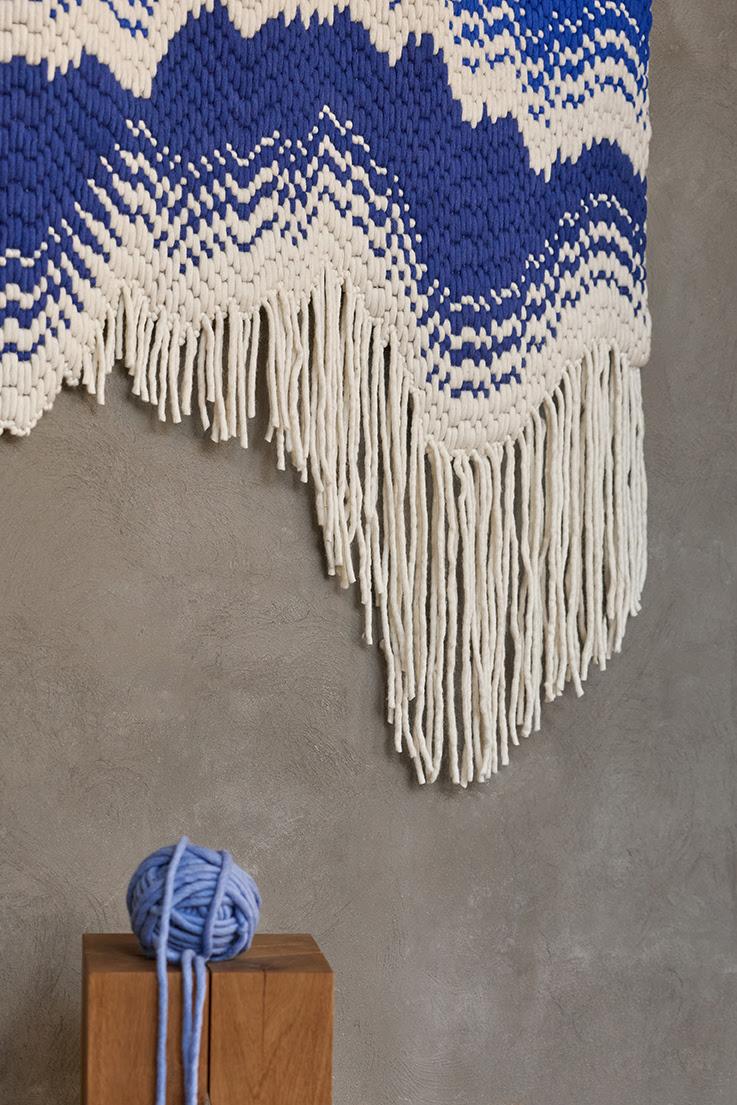
Charlotte Lancelot and GAN Rugs have been collaborating for over fourteen years. With this eighth Onda collection, Charlotte reinterprets the age-old techniques of Indian craftsmanship through a distinctly contemporary lens. These pieces, designed as contemplative tapestries, evoke both the sea and the layered sediments of the earth. The collection comprises various designs that can be combined to form diptychs or triptychs. Each tapestry is hand-embroidered with an extra-thick, felted wool thread, reinterpreting the traditional needle-painting technique.
At the Fedustria stand, we find Heerenhuis, a furniture brand known for its robust designs and raw materials. With the launch of the APEX bistro table, designed by Frederik Delbart, they are breaking new ground. A fusion of geometric precision and solid wood. APEX is a collection of dining and bistro tables with a base shaped by geometry and mathematical curves. Three concave surfaces converge and meet at a single apex – the point from which the collection derives its name and its logical structure. The triangle is the strongest shape in structural engineering, but here the inward-curving lines give the base an unexpected lightness. As light moves across the brushed metal surfaces, the curves capture both light and shadow.

Mathias De Ferm presented new designs at RH, an American lifestyle giant that has opened a showroom in Milan, alongside Royal Botania, Betaco, Joli and Per/Use. The LEAF coffee table is a variation on the popular side table and consists of three interconnected sections that can be rotated and arranged as desired within the space. This table is crafted from luxurious walnut or oak and is available with a sleek black or bronze-coloured frame. It combines organic forms with modern functionality.

The Cocoon sofa by Paul Rogers emerged from an intuitive, hands-on design process and envelops the user in natural, soft curves, whilst the wide, tactile bands in the shape of semicircles provide natural support for the body. At the back, the vertical bands gradually transition into horizontal bands. Jonas Van Put worked directly in three dimensions, hand-modelling a scale model and allowing the form to emerge from instinct rather than a predetermined plan. Available as a single-seater, sofa and an extra-large model.